ADA Compliant Portable Toilet Rules for Public and Temporary Use
Portable bathrooms are very easy to treat like a final line product. Somebody orders sufficient devices for the crowd, chooses a distribution spot, and carries on to power, fencing, or staffing. Accessibility often obtains interest just after a complaint, a walk-through, or a bad minute when a visitor shows up and realizes the restroom configuration does not help them.
That is specifically why this subject should have care.
An ada certified portable toilet is not simply a nicer or larger device. It becomes part of basic gain access to. At a public occasion, a road fair, a park event, a temporary workplace available to the public, or any kind of various other temporary configuration, restroom gain access to can identify whether someone takes part conveniently, struggles through the day, or leaves. For households, caregivers, older grownups, and mobility device customers, bathroom accessibility is not an information. It shapes the whole experience.
The controling federal criterion in the USA is the 2010 ADA Requirements for Available Design, as translated by the Division of Justice and the United State Gain Access To Board. That matters due to the fact that lots of sensible inquiries concerning ada certified mobile restrooms boil down to one straightforward concept: momentary does not indicate optional.
Temporary positioning does not terminate accessibility
One of one of the most relentless misconceptions in the field is the idea that portable commodes sit outside the normal accessibility guidelines since they are not irreversible structures. In technique, that is not how the typical works.
If you have a collection of mobile single-user commode systems, at least 5 percent of the systems in each collection have to be accessible The Accessibility Board explains that this uses also at short-term events. That factor captures people off-guard. They may presume a weekend event, seasonal tourist attraction, or one-day area occasion obtains a pass. It does not.
This is where planning typically goes wrong. Organizers focus on the overall variety of systems and forget the truth that access is measured within the cluster. If mobile commodes are spread out across a website in different groups, each team requires to be evaluated with that 5 percent guideline in mind. A single available device at one end of the property does not instantly fix gain access to problems for every various other washroom bank.
That distinction issues in genuine use. I have seen occasion formats where the only ada mobile restroom was practically on site, but the person that needed it had to travel much further than every person else, over rough ground, with crowded pathways. Theoretically, someone may have felt they checked package. On the ground, it was not equivalent access in any kind of purposeful sense.
What makes a mobile unit accessible
People typically use terms like ada obtainable portable restroom, ada handicap accessible mobile restroom, and ada portable toilet reciprocally. In casual conversation, that prevails. In compliance terms, what issues is whether the unit and the means it is set up satisfy the ease of access requirements that apply.
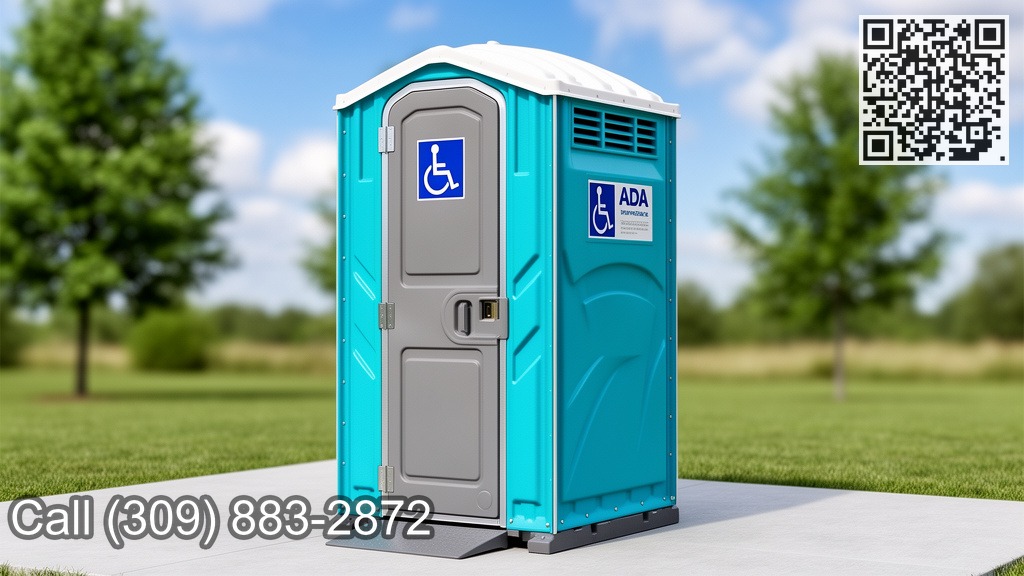
An easily accessible mobile commode system must do greater than exist. It should be identifiable, obtainable, and usable.
First, it must be identified with the International Icon of Accessibility That appears apparent, yet it is easy to miss when units are supplied wholesale, covered in branding, or repositioned throughout configuration. Clear recognition aids individuals find the ideal unit without asking for support or attempting each door one by one.
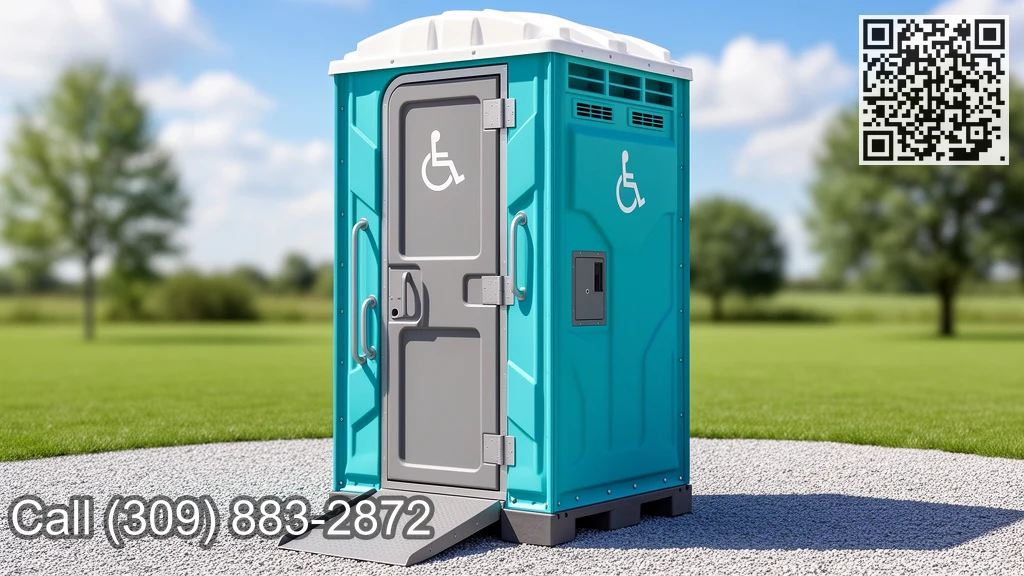
Second, it has to be on an accessible route and have an accessible entrance This is one of the most significant practical failing points. A supplier might deliver a completely ideal ada-compliant portable toilet, yet if it is positioned throughout soft ground, gravel ruts, mud, curbs, or unequal short-lived outdoor decking without compliant accessibility, the installation can still fall short the customer. Accessibility is not only regarding the covering of the bathroom. It is likewise regarding the path to get there and the capability to enter safely.
Third, if ramps or landings are required, those components must fulfill the ADA technical demands as well. This is where final improvisation produces danger. A quick plywood remedy might really feel useful in the minute, yet ease of access standards are not pleased by makeshift access that is unsteady, too steep, or lacks the needed touchdown conditions. If a ramp is required, it needs to be done right.
Inside the device, the needs link back to toilet-room technical requirements. The confirmed federal support indicate a number of https://rafaelkshf521.brightpathdigest.com/posts/ada-accessible-portable-restroom-rental-what-access-standards-apply particular locations: fixture clearances, turning area, door steering clearances, and relevant grab-bar and water-closet clearance rules That is the real core of ada portable toilet requirements The system must enable an individual to go into, maneuver, setting themselves, and utilize the component with the features and clearances the typical requires.
Why size alone is not enough
Many purchasers presume the larger system is automatically certified. In some cases a larger footprint belongs to the solution, however dimension by itself does not show anything.
A roomy inside that lacks the right clearances is still a problem. A wide-looking entrance that does not provide appropriate handling conditions can still be unusable. A grab bar installed despite the called for configuration does not come to be certified since it looks tough. This is why the phrase ada certified accessible portable restrooms ought to never ever be dealt with as an advertising adjective alone.
The far better technique is to assume in layers. The device itself need to fulfill the needed toilet-room technical criteria. The entrance needs to be accessible. The course needs to come. The device must be effectively marked. All of those pieces work together. If one breaks down, the customer feels it immediately.
That is specifically real at congested public events, where fatigue, weather, and time pressure amplify every tiny obstacle. A few extra inches of mud or an improperly put threshold may not register to the configuration crew. To a visitor making use of a mobility device or walker, it can make the washroom effectively unavailable.
The 5 percent guideline, and what individuals often miss
The 5 percent requirement is straightforward in phrasing, yet slippery in practice.
If you have a cluster of mobile single-user bathroom units, at least 5 percent of the systems in that cluster have to be accessible. This is not mounted as a wide website standard in the confirmed advice given below. It is tied to each cluster For coordinators, that indicates checking by area, not just by event-wide total.
A common mistake is under-ordering easily accessible devices due to the fact that a person rounds down as well strongly or thinks one obtainable unit someplace on site is enough. An additional blunder is relocating systems after distribution for group circulation or truck access and unintentionally leaving one cluster without appropriate available coverage.
When individuals ask me how to stay clear of that scramble, I usually recommend a fast pre-delivery check built around the real map rather than the order. Theoretically, everything can look compliant. On the ground, the collection near the phase might be fine while the cluster by the food court or parking side is not.
Here is a short field-check that aids capture troubles before gateways open:
- Count units by each separate collection, not simply by total site inventory.
- Confirm the available units are noted with the International Symbol of Accessibility.
- Walk the route to each easily accessible device as a customer would certainly, consisting of any ramp or landing.
- Check that the entry and indoor configuration support the required handling and clearances.
- Re-check after any type of relocation, fence change, or weather-related site adjustment.
That type of review sounds standard, however it protects against many of one of the most painful failings. Access issues with portable toilets are typically not strange. They are generally the result of presumptions made too quickly.
Public events versus construction-only use
This area triggers a lot of confusion because people find out about an exception and use it also broadly.
The ADA requirements history includes a difference including portable bathroom units at construction sites made use of exclusively by building personnel The verified context notes that these were exempt from the portable-toilet ease of access scoping need in the pointed out 1991 standard. That slim factor matters, however just because slim context.
It does not indicate that portable toilet services generally are exempt. For general mobile toilet rentals, the accessible-unit requirement stays. If the systems are offering public or short-term usage outside that limited construction-personnel-only circumstance, you must not assume the exemption applies.
This is where language issues. I have seen conversations wander into shorthand like, "It's short-lived," or, "It's primarily a jobsite setup." Those phrases can conceal the genuine concern, which is who the toilets are for and what requirements govern that setup. If the setup is for the public, for event guests, or for broader usage past building and construction employees specifically, ease of access needs to be dealt with as part of the core scope.
Placement is where compliance usually prospers or fails
The rented out system might be totally referred to as an ada compliant portable toilet in the contract, however positioning can reverse that in minutes.
Portable restroom suppliers and website supervisors generally work under stress. Trucks need turning area. Premises teams intend to protect grass. Organizers want bathrooms near website traffic yet not as well visible. Safety may desire them behind barriers. Each of those decisions affects accessibility.
The expression ada mobile bathroom rental must prompt 2 discussions, not one. The initial is about the appropriate equipment. The second is about the right place and method. If you only have the initial discussion, you are leaving the most usual field problem unresolved.
An ada easily accessible mobile restroom positioned on a course that becomes sloppy after rain can quit being meaningfully accessible. A system put on a slope might produce genuine trouble at the entrance. An unit put behind solution automobiles may technically exist but be tough to discover or technique. Even signage can matter in a busy location, particularly when individuals are browsing sound, groups, or time pressure.
Good placement typically feels uneventful. The course is steady. The obtainable device is easy to spot. The door area is not squeezed by obstacles, trash cans, or crowd-control fencing. An individual can get in, turn, and utilize the restroom without requiring staff intervention. That need to be the common individuals work toward, not simply minimum paper compliance.
Technical compliance is not simply a box for inspectors
The ADA technical needs for toilet rooms are often treated as abstract design policies. They are not abstract to the people who rely upon them.
Turning room influences whether a wheelchair customer can reposition inside the unit. Door navigating clearances affect whether an individual can open and close the door without obtaining trapped in an awkward angle. Grab-bar and water-closet clearance rules impact transfers, security, and safety and security. Fixture clearances impact whether the toilet can be made use of individually at all.
This is why ada-compliant portable restrooms ought to never ever be marketed or acquired solely on the basis of "extra area." The point of the standard is usability, not just square video. A compliant arrangement is attempting to make a normal job feasible with dignity, safety and security, and as much self-reliance as possible.
For operators, that viewpoint modifications just how the work feels. You stop thinking about accessibility as a separate unique item and start seeing it as the part of the toilet strategy that figures out whether every person can participate.
The language people use, and the language that matters legally
Clients often search phrases like ada compliant mobile toilets, ada-compliant mobile toilet, or ada mobile restroom because they are attempting to fix a practical issue quickly. That is easy to understand. Search language is messy. Contracts can be vague. Sales terms vary by area and by vendor.
Still, from a conformity perspective, the crucial questions are consistent. Does the configuration provide the called for number of accessible systems for each and every cluster? Are those systems related to the accessibility icon? Is there an easily accessible route and entrance? Do any kind of ramps and touchdowns abide? Does the unit fulfill the suitable toilet-room technical requirements?
Those inquiries punctured branding and shorthand. They additionally aid when comparing vendors. One firm might promote an ada handicap accessible portable restroom while an additional uses the tag ada compliant accessible portable restrooms The wording alone does not answer whether the provided arrangement will certainly satisfy the criterion in your specific layout.
That is why skilled coordinators request clarity on both the unit and the installment problems. A good leasing conversation specifies. Where will the units rest? Just how will individuals reach them? Will any kind of temporary ramp or touchdown be needed? Will the symbol be visible after branding or placement? Will the accessible devices remain in the cluster they were planned to serve?
Temporary does not imply low-risk
Portable bathroom availability troubles can feel small to organizers up until the initial person is impacted. After that the problem gets extremely real, very quickly.
Someone misses out on part of an event due to the fact that the only useful toilet is too away. A moms and dad aiding a grown-up child fights with path problems. A wheelchair user reaches a neighborhood function and has to ask staff to move barriers. None of these moments are dramatic in the legal feeling at first look, but they are deeply substantial in human terms. They signal who was thought about in the planning process and who was not.
The broader conformity climate also matters. Accessibility enforcement is not shrinking. The verified context here notes recurring ADA conformity activity throughout fields, including recent federal support around internet and mobile ease of access deadlines for state and local government entities. That advice is not concerning mobile commodes straight, yet it mirrors a larger reality: ease of access is being dealt with as an energetic compliance responsibility, not a dormant problem people can safely ignore.
For companies that manage occasions, parks, civil services, or momentary facilities, that must be enough reason to tighten treatments now instead of wait on a complaint.
What mindful coordinators do differently
The best-run websites do not deal with the accessible washroom as an add-on. They construct it into the initial variation of the plan.
They count clusters early. They reserve sufficient accessible systems before supply obtains tight. They walk the site with course conditions in mind. They consider weather condition, crowding, and the opportunity that a route that looks fine at 8 a.m. May not be great by mid-afternoon. They collaborate with suppliers so the ada certified portable restrooms are supplied where they are really needed, not parked where the vehicle chauffeur had the most convenient exit.
They also review the configuration after installation. Portable toilets are relocated, nudged, and re-lined regularly than individuals understand. A certified positioning at distribution can end up being an endangered placement by opening up time if various other website components change around it.
If there is one practical lesson that shows up over and over, it is this: ease of access is rarely lost because nobody bought the best device. It is lost since no one followed the unit all the way with to real use.
A great criterion for decision-making
When you are uncertain whether your restroom plan is absolutely accessible, one concern cuts through the sound: can a person discover the accessible device, reach it, enter it, maneuver inside, and utilize it with the features and clearances called for by the ADA standards, without unique support and without an even worse experience than every person else?
If the truthful response is no, the arrangement needs work.
That is the heart of ada mobile commode requirements for public and short-term usage. The criteria are technical, however their purpose is human. They exist so that a portable washroom, even in a short-term setting, does not become an obstacle that omits somebody from work, community life, or an easy day out.
For any person organizing an ada mobile toilet rental, that is the right attitude to keep from the first website sketch to the final placement. The rules are not there to complicate your event. They are there to make sure your occasion, solution, or short-term center is open in technique, not simply in theory.
 Ask ChatGPT
 Ask Grok
 Ask Perplexity
 Ask Claude
 Ask Google AI
 Ask You